Maya Huipil: Village Identity in Weaving

The Huipil
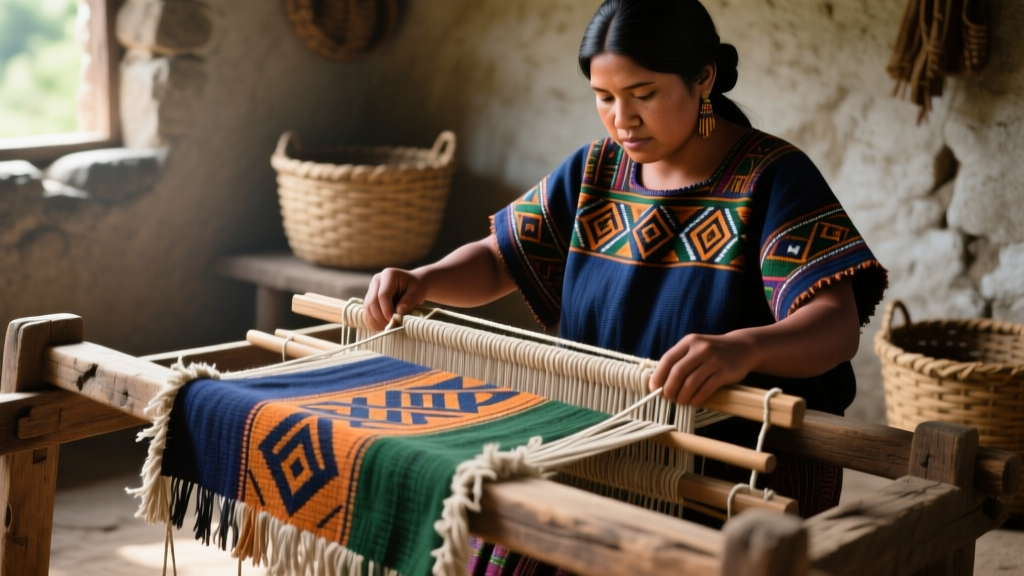
The huipil is a traditional blouse worn by Maya women across Guatemala and southern Mexico. Each village has distinctive patterns, colors, and motifs that immediately identify the wearer community of origin.
Village Identification
Experts can identify a huipil origin by its design: Solola features geometric animals in bright colors, San Juan Cotzal uses deep red with zigzag patterns, and Nahuala shows large star motifs on dark backgrounds.
Backstrap Loom Technique
Women weave huipils on backstrap looms, the same technology used for thousands of years. The weaver controls tension with her body, creating tight, durable fabric with complex brocade patterns.
Symbolic Motifs
Common designs include the quetzal bird (freedom), double-headed eagle (Spanish colonial influence), diamond shapes (the universe), and flower bands (the natural world). Each motif carries layers of meaning.
Economic and Cultural Pressures
Machine-made imitations from factories threaten authentic hand-woven huipils. Cooperatives and fair-trade organizations help weavers earn sustainable incomes while preserving their art.