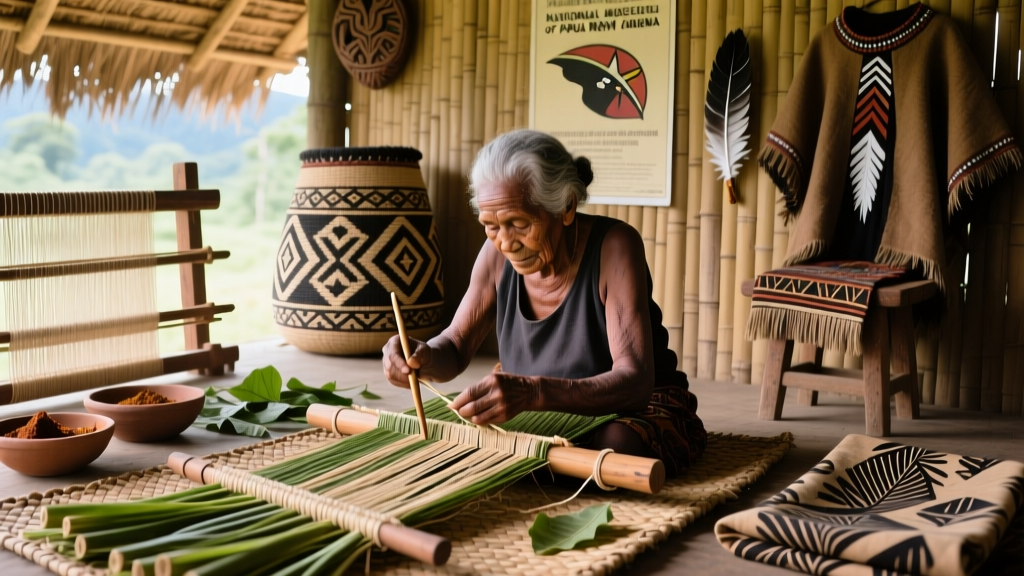
Fijian Masi: Tapa Cloth Living Traditions

Masi: Fiji's Sacred Bark Cloth Heritage
Masi is the Fijian word for tapa cloth — a textile beaten from the inner bark of the paper mulberry tree (masi in Fijian). Unlike the more widely known Polynesian tapa traditions, Fijian masi has distinct characteristics that reflect the archipelago's Melanesian roots and centuries of inter-island exchange.
Types of Fijian Masi
- Masi Kesa: The most common type, decorated with geometric stencils cut from coconut leaf midribs. Brown and black designs on natural cream background.
- Masi Boliti: A rarer style featuring freehand painted motifs, often depicting local flora, fish, and canoe prows.
- Masi Kuvui: Smoked or dyed dark brown, used primarily for men's ceremonial garments and chiefly presentations.
The Stencil Technique
Fijian masi kesa uses a unique stencil printing method. Artisans carve repeating patterns into dried coconut spathes or banana leaves, then press the stencil onto the cloth and rub brown pigment (from mangrove bark) over it. This creates crisp, repeatable designs — a technique found nowhere else in the Pacific.
Ceremonial Roles
Masi plays essential roles in Fijian life events:
- At births, masi wraps the newborn as a blessing from ancestors
- At weddings, the bride's family presents masi as dowry
- At funerals, masi covers the body and lines the burial site
- In chiefly installations, masi signifies the transfer of authority
Vatuelele: The Masi-Making Village
The village of Vatuelele on Fiji's main island, Viti Levu, is recognized as the premier masi-making center. Women there maintain unbroken production lines, passing stencils and techniques from grandmother to granddaughter. UNESCO has recognized Fijian masi as an intangible cultural heritage element worthy of safeguarding.